
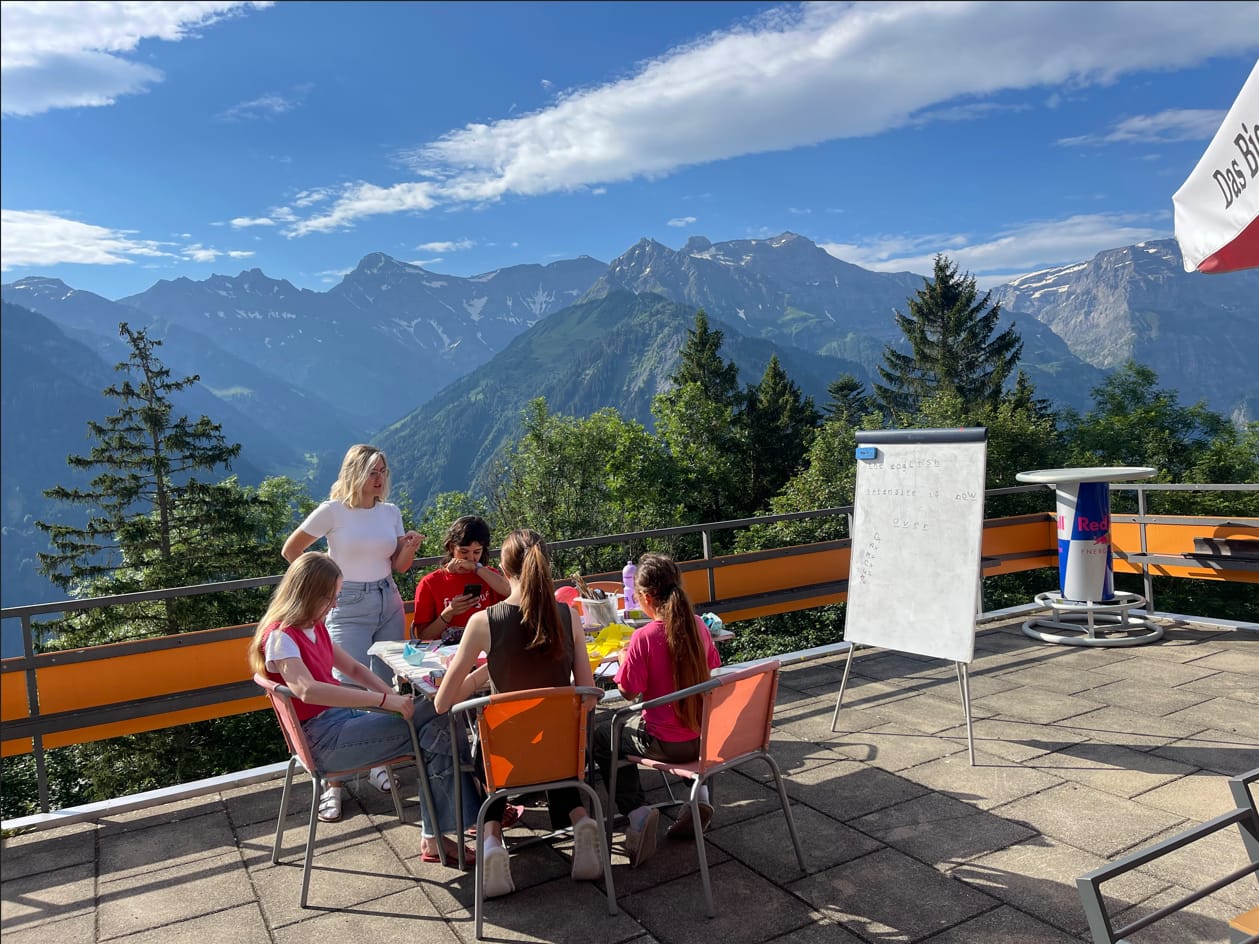
At friLingue, language learning is part of camp life: shared meals, activities, excursions and new friendships give children many natural reasons to listen, speak and try again.
Language is used, not just studied
Interactive lessons make room for conversation and active participation. Outside class, children keep encountering the language in a real social setting.
Small groups of 6 children on average
With around six children per group on average, teachers can notice individual strengths and support confident participation.
A camp experience that builds confidence
For many children, camp is a first experience away from home with new people. A caring, structured setting helps them take responsibility, find their place in a group and return with new confidence.
More conversation, less screen time
Language learning continues during meals, games and excursions. By setting aside time away from phones, children have more chances to talk, take part and form friendships. The aim is a healthy balance that supports the shared camp experience.
Learning with a wider purpose
friLingue also describes its work with social and exchange partners as part of its commitment to access, encounter and intercultural learning. Read the founder interview and the current engagement information on the original site: friLingue in the media and friLingue engagement.
Working with Kovive
Through its partnership with Kovive, friLingue supports language-camp stays for children from families facing financial hardship, opening up access to holidays, new friendships and learning experiences.
In the interview linked above, founder Philipp Alexander Weber explains how his own experiences at language camps inspired friLingue.